Design notes · Bedding craft
From Human Bedding to Pet Mattresses: How Senzero Adapts the Design
Senzero brings human bedding know-how into pet mattress design through support-core choices, fabric quilting, cover construction and edge finishing. Each pet model brings those elements together around its own size, resting space and care requirements.
A bedding approach to a pet product
A mattress brings several decisions together: the support structure, the layers around it, the sleeping surface and the way the edges are finished. Senzero uses that way of thinking in its pet mattress program. Our current directions include coir-core and mini pocket spring constructions, with dimensions, cover details, branding and packaging developed around the selected model.
The connection to human bedding is practical. Senzero’s documented manufacturing resources include pocket spring production, fabric quilting and cutting, sewing, tape edging and assembly. These capabilities provide a starting point for developing a pet-sized product; the finished construction still needs to suit its own use.
For brands and retailers, this creates a clear design conversation: how the mattress is built, what the customer sees and touches, and how it fits into everyday life with a pet.
What the sample shows: surface, corner and edge
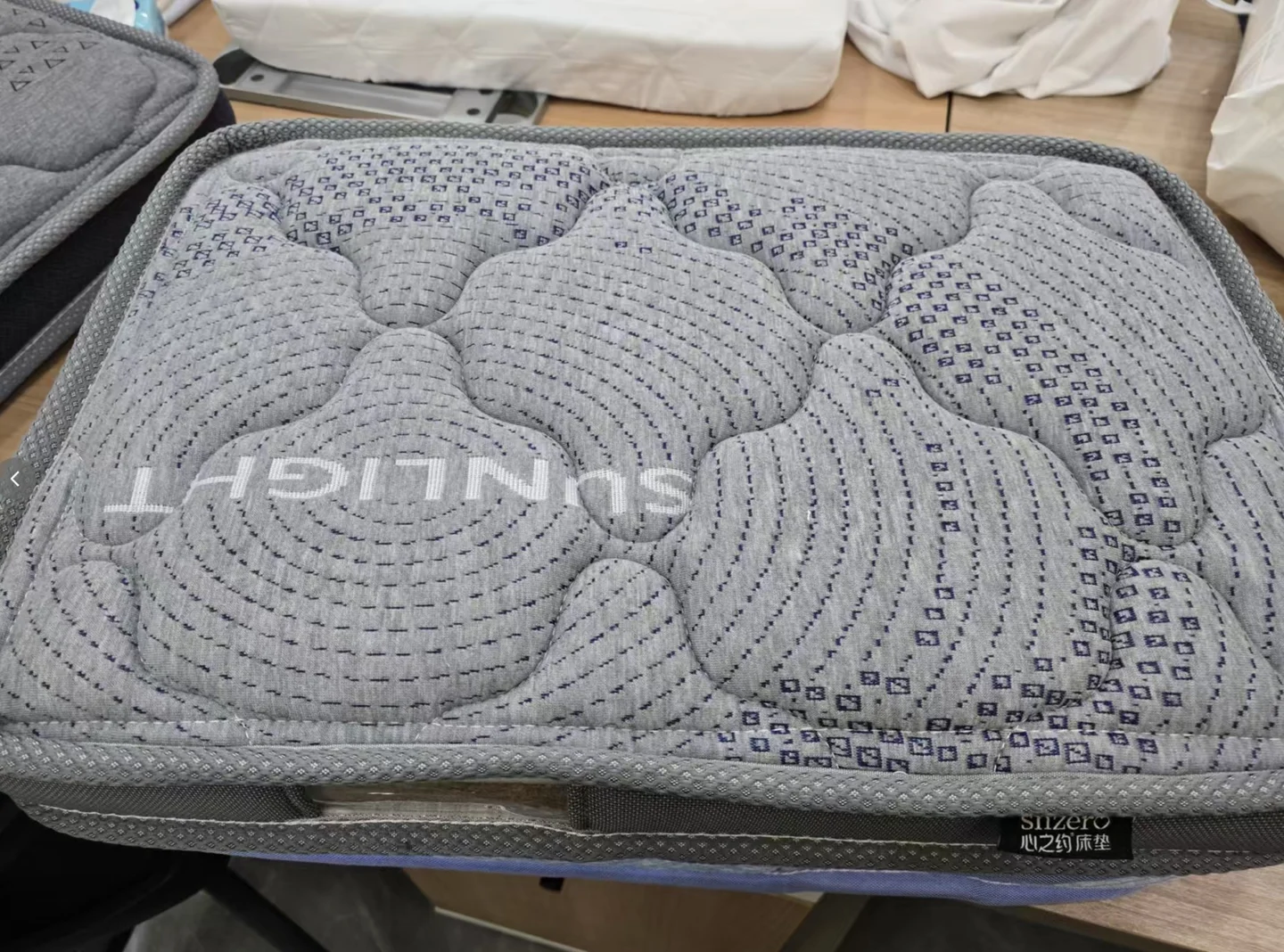
Look at the curved quilting lines across this sample. They give the top panel a visible pattern and texture. Around the perimeter, the finished edge defines the transition from the sleeping surface to the side panel. The rounded corner and side handle are further details visible in the photograph.
These are useful starting points for a private-label design. A buyer can discuss the quilting pattern, cover appearance and edge treatment together, instead of choosing a fabric swatch in isolation. The relationship between those details gives the finished product its visual identity.
The exterior photograph does not identify the internal core. Coir and mini pocket spring options belong to the wider Senzero pet mattress program; the construction for a particular sample is confirmed separately.
From a quilted panel to a finished cover
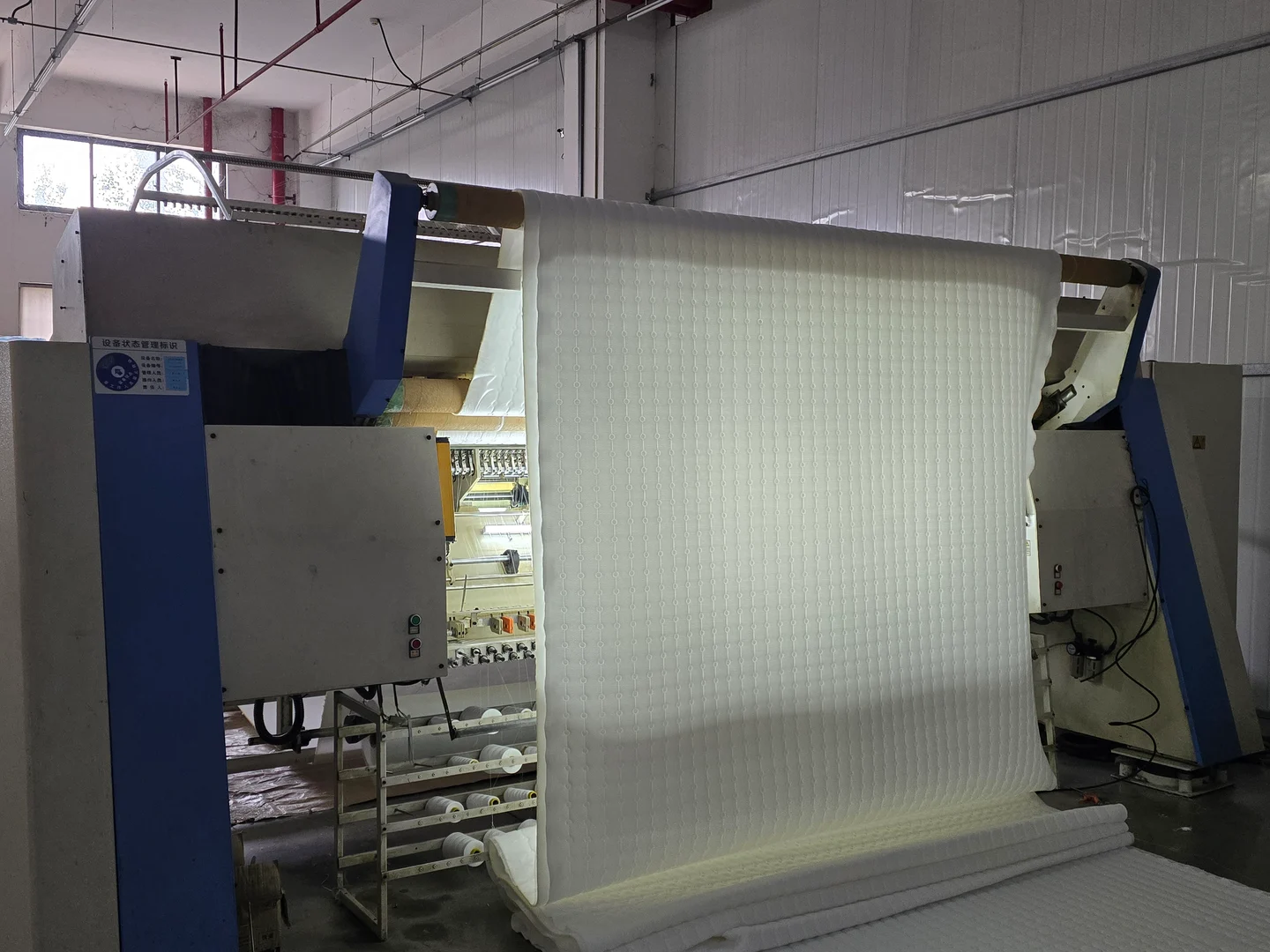
In bedding production, quilting joins a surface fabric and its backing or filling layers in a stitched pattern. Cutting and sewing then turn panels into components with a defined shape. The equipment photograph shows the quilting stage of that broader workflow.
For a pet mattress, the design task connects the top panel with the side, underside and opening. A change in finished height affects the side-panel dimensions. A different corner shape changes the cover fit. Quilting and edge details therefore belong in the same product specification as the overall size.
Our manufacturing overview explains the wider production capabilities. The exact route and materials depend on the chosen pet mattress configuration.
What changes when the mattress is for a pet?
The product brief starts with the pet’s resting space and the place where the mattress will be used. A floor mattress, a mattress inside a furniture-style bed and a fitted crate insert can require different footprints and clearances. Finished height, corner shape and usable surface need to be considered together.
Day-to-day care also shapes the design. With a removable-cover configuration, the opening must work with the mattress shape so the cover can be taken off and refitted. Cleaning instructions belong to the selected fabric and construction; a removable cover alone does not establish machine washability.
| Bedding decision | Pet mattress application |
|---|---|
| Support construction | Select the core and surrounding layers for the complete model, then evaluate the sample. |
| Quilting and panel shape | Coordinate the sleeping surface, corners, side panels and finished height. |
| Edge and opening | Define the outline and, where applicable, access for removing the cover. |
| Product identity | Bring fabric, quilting, edge details and label placement into one coherent design. |
This is how the human-bedding connection becomes concrete: familiar construction decisions are worked through again for the pet product’s dimensions, presentation and care requirements.
A clear starting point for your own collection
A useful first brief can be simple: a reference for the appearance, the intended resting space, the preferred size range and the cover direction. Senzero can then discuss the available core options and the details that need sample confirmation.
For example, a brand may want a quilted rectangular mattress with a coordinated side panel and its own label. The development conversation connects that appearance with finished height, core choice, corner shape and cover access. Changes to one part can affect the others, so they are considered as a complete product.
Send your target market, quantity by size and visual references with the brief. We can discuss size, fabric, branding and packaging options for your selected configuration. The aim is a pet mattress with a clear construction and a recognisable place in your collection.
Develop a pet mattress for your collection.
Share your size range, design references, target market and quantity. We’ll help you define the next sample brief.
Discuss your requirements