Product formats · A buyer’s comparison
Pet Mattress or Upholstered Pet Bed? Choosing the Right Format for Your Range
Choose a flat pet mattress when your range centres on the sleeping surface and its construction. Choose an upholstered pet bed when the surrounding frame, backrest and furniture-style appearance are part of the product. Compare the usable resting space, entry height and care requirements of the actual models before deciding.
Two formats, shown with real samples
“Pet bed” is a broad category name. For this comparison, a pet mattress is a flat sleeping unit without a surrounding furniture frame. An upholstered pet bed is a furniture-style product with a padded frame and a defined resting area inside it. These terms describe the format, not a particular filling or performance level.
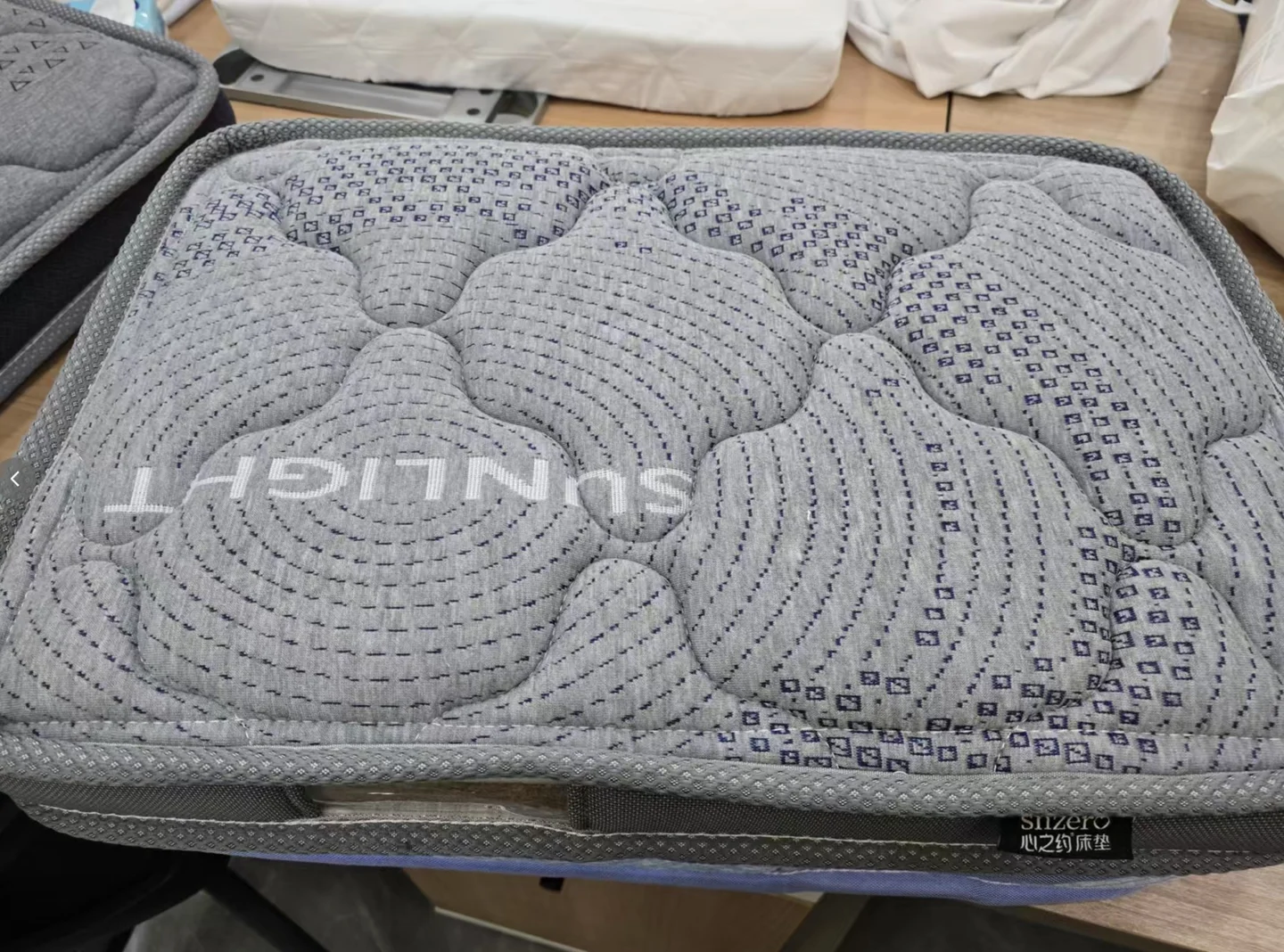
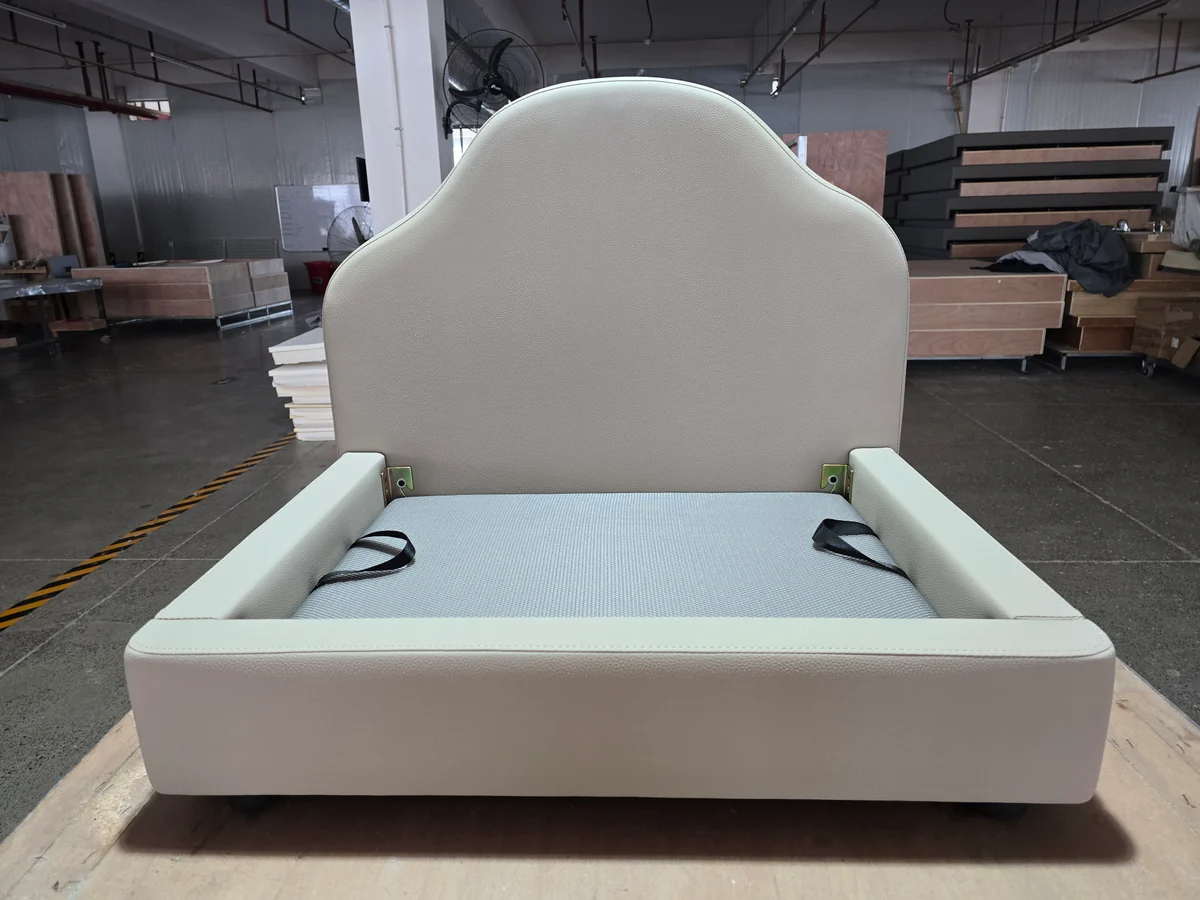
Senzero’s pet mattress program includes coir-core and mini pocket spring options. Its upholstered pet bed program is a separate product category. Choosing the furniture-style format does not automatically specify a spring mattress, memory foam or a particular cushion.
| Decision | Flat pet mattress | Upholstered pet bed |
|---|---|---|
| Product outline | The mattress itself defines the footprint. | The back and rails form part of the outer footprint. |
| Resting space | Check the usable top surface, including the effect of rounded edges. | Measure the clear space inside the surrounding frame. |
| Visible design | Quilting, cover fabric, side panel and edge finish. | Backrest shape, upholstery, rails, feet and the relationship between them. |
| Care specification | Identify the cover, any removable parts and the core’s care limits. | Identify care for the upholstered frame and each separate component. |
| Supply description | State the chosen mattress construction and supplied cover. | List the complete supplied components; do not infer them from the category name. |
Compare the space the pet can use
Two products with the same outside length and width can offer different resting areas. On a framed bed, the surrounding rails occupy part of that footprint. On a flat mattress, edge shape and the usable surface still matter. A size label such as “Large” cannot resolve the difference.
Use two measurements on a product drawing: overall footprint and clear resting area. For a framed bed, measure between the inner faces of the rails at the level where the pet rests. For a mattress, identify the usable top area rather than relying only on the widest outside points.
For illustration only, an 80 × 60 cm outer footprint with a 6 cm rail on each side would leave 68 × 48 cm inside, before allowing for any taper or padding. Those are example numbers, not dimensions of either photographed Senzero sample. The point is to compare the inner space before giving two products the same size designation.
For your retail listing, show both dimensions on furniture-style beds. Our size-chart guide explains how to record usable resting space consistently.
Check the route into the bed
A low-looking bed is not necessarily low at its entry point. For a flat mattress, record the height from the floor to the top surface. For a framed bed, also record the height of the front rail and the clear opening the pet crosses. Side-view photographs make these differences easier to understand than a front view alone.
Match those measurements to the intended pet and placement. If a product is meant to fit inside another bed or an enclosure, confirm the internal length, width, corner shape and clearance. Do not assume a separately selected mattress will fit a furniture-style bed simply because both use the same nominal size label.
Neither format alone proves suitability for a pet with mobility difficulties. Evaluate the complete model and the individual pet’s needs; a product photograph or the word “orthopedic” is not evidence of a medical benefit.
Separate surface care from frame care
For a flat mattress, the practical question is which parts can be removed and how each should be cleaned. A removable cover, a machine-washable cover and a water-resistant layer are different specifications. Confirm them for the selected construction.
For an upholstered bed, discuss the surrounding frame as well as the resting surface. A removable interior component does not make the fixed upholstery washable. Ask for component-specific care instructions that can be used on the product label and customer support page.
Moving the product is another separate question. Record its finished weight, intended lifting points and assembly state. A handle visible in a photograph does not establish a lifting-load rating, and the category name does not tell you which complete product is lighter. Use the actual sample for those decisions.
Give each format a role in your range
A mattress-focused collection can be organised around support construction, surface design and a clear size range. Its product page should make those differences easy to compare. A furniture-style collection can be organised around shape, upholstery and how the complete bed fits with the room’s furniture.
Consider two possible range briefs. The first is a coordinated set of rectangular mattresses with one quilting direction and several sizes. The second is a furniture-style bed developed around a curved back and a chosen upholstery palette. These are planning examples, not customer case studies. They lead to different sample reviews and different product-page photographs.
A retailer can carry both formats if each has a clear purpose. Show the flat mattress and the complete framed bed separately, with their own dimensions and included components. If they are offered together, verify the fit and describe the bundle explicitly.
Turn the choice into a product brief
Start with the format and the resting space you want to offer. For a mattress, add the preferred construction and cover direction. For an upholstered bed, add the desired silhouette, upholstery and outer-space limits. In both cases, identify the target market, expected quantity and any reference images.
Senzero supports specification-based discussions about size, fabrics, branding and packaging. Available combinations, supplied components and sample terms are confirmed for the selected product. Keep the approved sample and its component list together so that your retail description matches what customers will receive.
Choose the starting point for your collection.
Send your preferred format, target resting area and design references. We can discuss the appropriate product program.