Construction notes · Pocket spring pet mattresses
Inside a Pocket Spring Pet Mattress: Understanding the Core, Layers and Edges
A pocket spring pet mattress combines a fabric-wrapped spring unit with surrounding upholstery and a finished cover. Understanding its construction means separating the support core, the layers between that core and the surface, and the way the sides and edges are finished. The exact layer order belongs to the selected model.
The photographs below are real bedding and product references from Senzero’s materials. They show different samples and stages, with each use identified. This is a construction guide, not a teardown or material specification for one finished pet mattress.
The spring inside its pocket
In a pocket spring unit, each coil sits inside its own fabric enclosure. The pockets are assembled into a wider unit, which becomes a component of the mattress. The outer mattress cover is another component altogether.
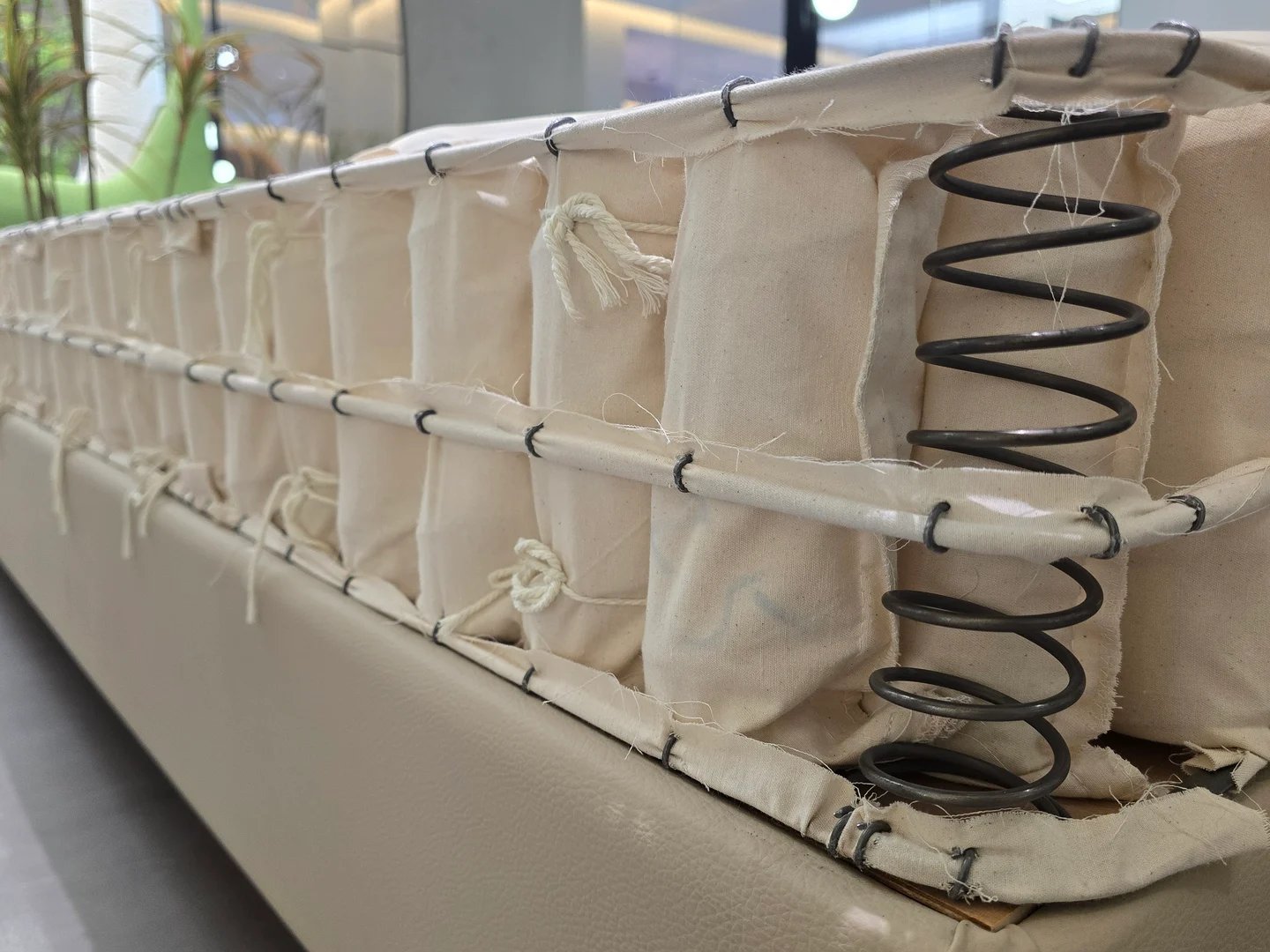
The photograph makes the distinction tangible: the metal coil is one part, and its fabric pocket is another. The pocket fabric belongs to the internal spring assembly; it is not the washable outer cover described on a product listing.
Leggett & Platt’s pocket spring overview likewise identifies individually fabric-wrapped coils and shows several possible unit designs. That terminology explains a construction family; it does not set the wire diameter, spring height, coil count or performance of Senzero’s selected model.
The layers around the core
A spring unit is not the entire sleeping surface. Materials placed around it can separate the unit from the cover, form part of the padding and help hold the intended assembly together. A layer’s purpose and its material name should be recorded separately: “protective layer” describes a job, not a verified fibre composition.
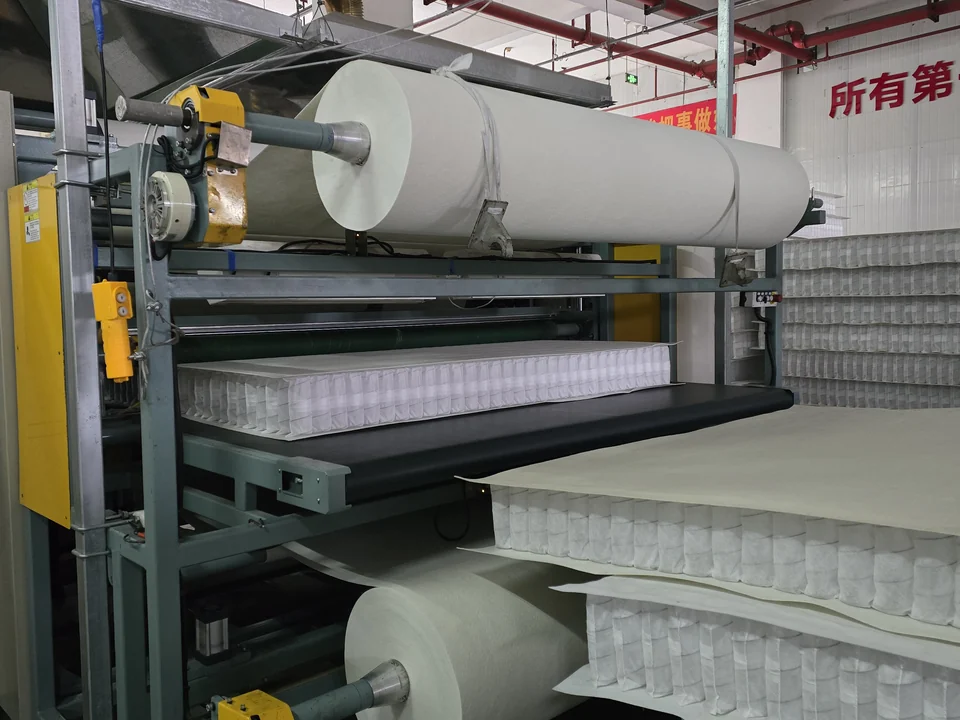
For a pocket spring dog mattress, the useful description names each specified layer in order, starting at the sleeping surface. It also distinguishes loose or bonded internal layers from padding already quilted into the cover. Without that distinction, the same material can accidentally be counted twice in a specification.
There is no universal five-layer or seven-layer recipe here. Senzero’s pet mattress programme includes mini pocket spring and coir-core directions. The selected core, surrounding materials and finished height must be read as one confirmed construction, rather than inferred from a finished exterior.
The top, bottom and side panel
In the workshop description, “top, bottom and border” refers to three fabric components. The top forms the visible sleeping face, the bottom covers the underside, and the border is the side panel around the perimeter. These are not three types of spring layer.
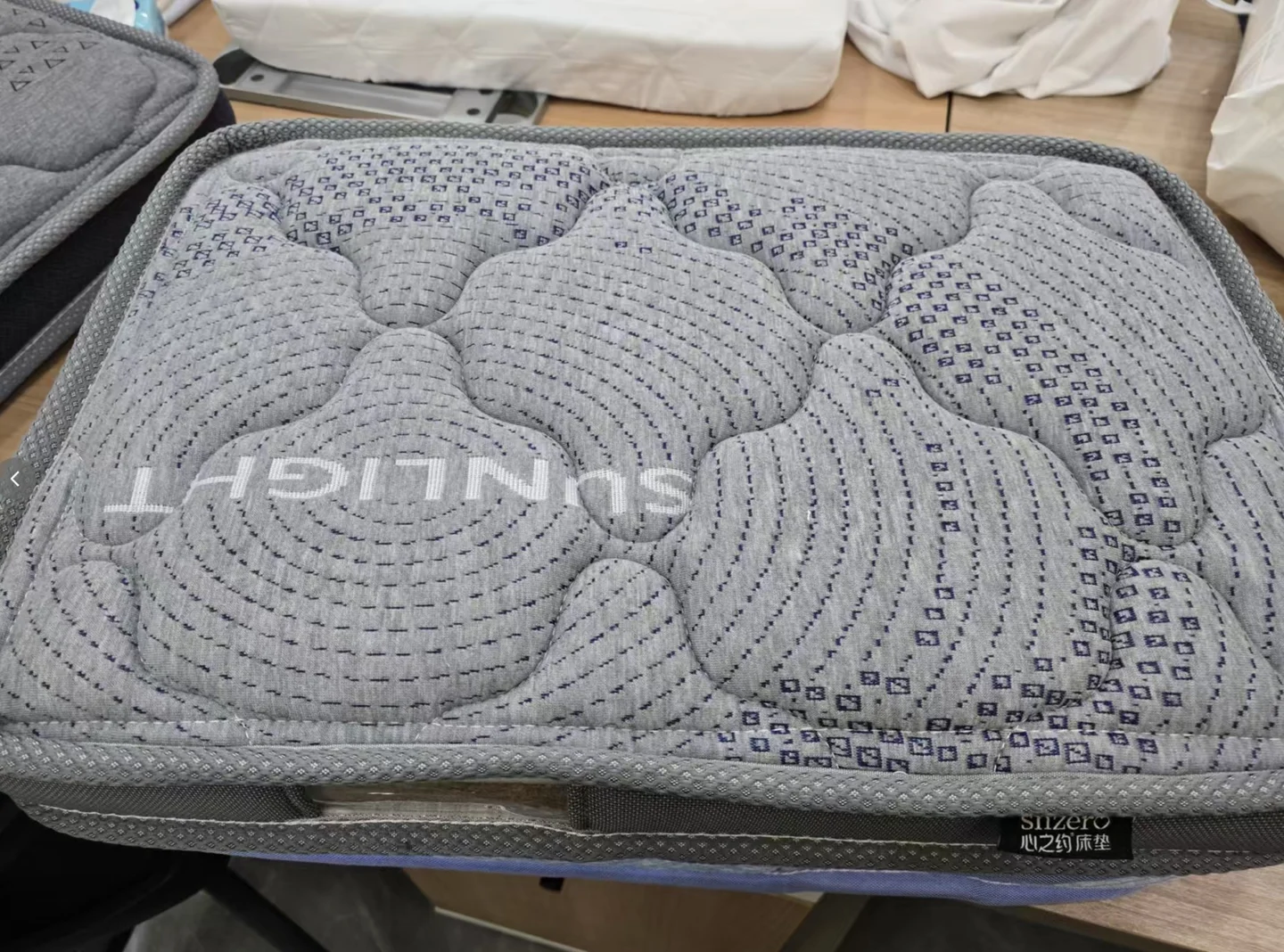
Quilting joins the panel’s chosen materials in a stitched pattern. The resulting panel then has to fit the finished mattress outline and height. A change in padding or core height can therefore require a different side-panel depth, even if the length and width stay the same.
Where a removable cover is specified, its opening is a separate design detail. Confirm which component is removed and how it is refitted. The cover-care guide explains why removability alone does not establish a washing method.
Three different details at the edge
The word “edge” can refer to the outer fabric, the seam that finishes it, or an internal support component. Keeping these separate makes a drawing or sample much easier to discuss.
- Side border
- The fabric panel around the side of the mattress. Its appearance, quilting and finished depth are cover details.
- Edge binding or tape edging
- A sewn finish at an edge or panel join. It does not, by itself, identify an internal reinforcement.
- Structural perimeter support
- An internal construction choice, such as a specified metal frame or firm foam surround. Its presence and design require confirmation for the model.
Vispring’s craftsmanship description, for example, describes tape edging as a sewn border finish and treats side stitching separately. This is a terminology reference, not a statement that Senzero uses that manufacturer’s construction.
In Senzero’s workshop briefing, additional perimeter support was described as an optional operation, commonly omitted from the export mattresses being discussed. It should not become a mandatory feature in every pet mattress specification. Conversely, an outside seam cannot prove that a particular mattress has no internal reinforcement.
Two streams prepare the parts before assembly
The documented bedding workflow helps explain why the spring unit and cover should be described separately: they are prepared in parallel before assembly.
Spring-unit preparation
Build the support component
Spring forming and, for a pocket spring construction, fabric pocketing and unit assembly. The specified covering layers are prepared around the core.
Fabric-component preparation
Prepare the top, bottom and border
Quilting, cutting and sewing create the cover components to the required shape and dimensions.
Assembly
Bring the components together
Lay-up, bonding where specified, fitting and closing the cover, then packing. The precise operations depend on the construction.
This is a summary of the documented bedding-production route, not a continuous production record for one pet SKU. The manufacturing page shows the individual workshop stages in more detail.
Connect the explanation to one identified model
For a custom pet mattress, turn the general component names into a model-specific record. Keep three items together: the sample identifier, a labelled section drawing or cutaway of that sample, and the material description in the same top-to-bottom order. Identify the side construction separately so a flat layer list does not hide a perimeter component.
The finished exterior, exposed core and drawing should refer to that same sample and revision. This makes it possible to answer a precise question—such as whether a pad is quilted into the cover or fitted separately—without guessing from another mattress’s photograph.
To discuss a mini pocket spring pet mattress, send your reference, intended dimensions and the construction details you want to confirm. We can review the available specification and sample route for the selected configuration. The custom development guide covers how those decisions move into sample approval.
Questions about pocket spring pet mattress construction
What is inside a pocket spring dog mattress?
A pocket spring unit works with the surrounding upholstery and a finished cover. The precise materials, layer order and edge construction depend on the model. A confirmed section drawing or identified cutaway is needed to describe a particular product accurately.
Is the spring pocket the same as a removable mattress cover?
No. The pocket is the fabric enclosure around an individual spring inside the core. A removable outer cover encloses the mattress assembly. Removing that outer cover does not necessarily expose the spring unit or make the internal components washable.
Does a sewn edge mean the mattress has reinforced sides?
No. Edge binding or tape edging describes a sewn finish. Internal perimeter reinforcement is a separate construction choice. Identify any metal frame, foam surround or other reinforcement from the specification and sample, not from the outside seam.
Are the photographs a complete teardown of one Senzero pet mattress?
No. They show a bedding spring display sample, a workshop covering operation and a separate finished pet mattress sample. Each photograph is labelled for its role; they do not establish the layer sequence or specifications of one finished pet model.
Discuss the construction for your pet mattress.
Share a reference and the size you are developing. Ask about the core, surrounding layers and cover arrangement for that configuration.
Discuss a spring mattress sample ↗